Concrete Slab & Foundation Work
Every building needs a solid foundation, and concrete provides the strength and stability that keeps your structure safe and level for generations.
Why Foundation Quality Matters
Your foundation supports everything above it. When a foundation fails or settles unevenly, you'll see cracks in walls, doors that won't close properly, and floors that slope. These problems start small but get worse over time, eventually requiring expensive repairs. That's why getting your foundation right from the start is so important. You can't fix a bad foundation without major work, so it pays to do it correctly the first time.
Concrete slab foundations are popular in our area because they're cost-effective and perform well in various soil conditions. A slab foundation is exactly what it sounds like: a thick concrete pad poured directly on prepared ground. The edges are thicker to carry the weight of exterior walls. This design provides a solid, stable platform for your building without the complexity and expense of a full basement or crawl space.
The process begins long before we pour any concrete. Site preparation is critical. We evaluate soil conditions, check drainage patterns, and determine if any soil needs to be removed or added. Poor soil must be excavated and replaced with stable fill material. The ground must be properly graded so water flows away from the foundation rather than pooling around it. These steps take time and careful attention, but they prevent problems that would cost far more to fix later.
After site prep, we install a compacted gravel base that distributes weight evenly and provides drainage. Then we place vapor barriers to prevent moisture from wicking up through the concrete. We install steel reinforcement to add tensile strength and prevent cracking. Only after all these steps are complete do we pour the concrete itself. When you choose MapleLane Fitchburg Concrete for foundation work, you're getting a team that understands these critical details and never cuts corners on the fundamentals.
Common Foundation Types We Install
Different buildings require different foundation approaches. The right choice depends on your building's size and purpose, soil conditions, local building codes, and your budget. Here are the most common types we install for residential and light commercial projects.
Slab-on-Grade Foundations
This is the most common foundation type for homes without basements, garages, workshops, and small commercial buildings. We pour a single concrete slab that serves as both the foundation and the floor. The edges are thicker where walls will sit, providing extra support. Slab-on-grade foundations work well in our climate and are cost-effective compared to other options. They're also faster to install than foundations with crawl spaces or basements.
Garage and Shed Slabs
Detached garages, storage sheds, and workshop buildings need proper foundations just like houses do. These slabs are typically four to six inches thick with thickened edges. We make sure the floor is properly sloped toward the garage door opening so water runs out instead of pooling inside. For heated spaces, we often install rigid foam insulation under the slab to improve energy efficiency and prevent frost heaving.
Equipment Pads and Support Slabs
Heavy equipment like generators, HVAC units, or storage tanks need stable concrete pads. These are smaller slabs designed to support concentrated loads without settling. We calculate the required thickness based on the equipment weight and soil bearing capacity. Proper elevation and drainage around equipment pads prevents water accumulation and protects your investment.
Barn and Agricultural Slabs
Barns, equipment storage buildings, and agricultural structures benefit from concrete floors. These slabs must handle heavy machinery, livestock traffic, and sometimes chemical exposure from fertilizers or feed. We design these slabs with appropriate thickness and reinforcement for the expected use. If you need specialized foundation work, our team has experience with various applications. We also handle related concrete work like driveways for equipment access and walkways connecting buildings.
How We Build Foundations That Last
Foundation work requires precision and attention to detail at every step. Rushing through any phase of construction compromises the final result. Here's how we approach each foundation project to ensure quality from the ground up.
Site Evaluation and Planning
Before we dig, we need to understand what we're working with. We test soil conditions to determine bearing capacity and identify any problem areas. We locate existing utilities so we don't accidentally damage water lines, gas pipes, or electrical cables. We review local building codes and obtain necessary permits. We establish proper elevations based on existing grade and drainage requirements. This planning phase prevents surprises during construction.
Excavation and Base Preparation
Excavation depth depends on local frost depth requirements and the building design. In our area, footings typically extend below the frost line to prevent heaving. We remove topsoil and any unsuitable material, then grade the excavated area to ensure proper drainage. Next, we install and compact a gravel base. This base provides a stable platform and allows water to drain away rather than collecting under the slab. We use mechanical compaction equipment to achieve the density required by building codes.
Forms, Reinforcement, and Utilities
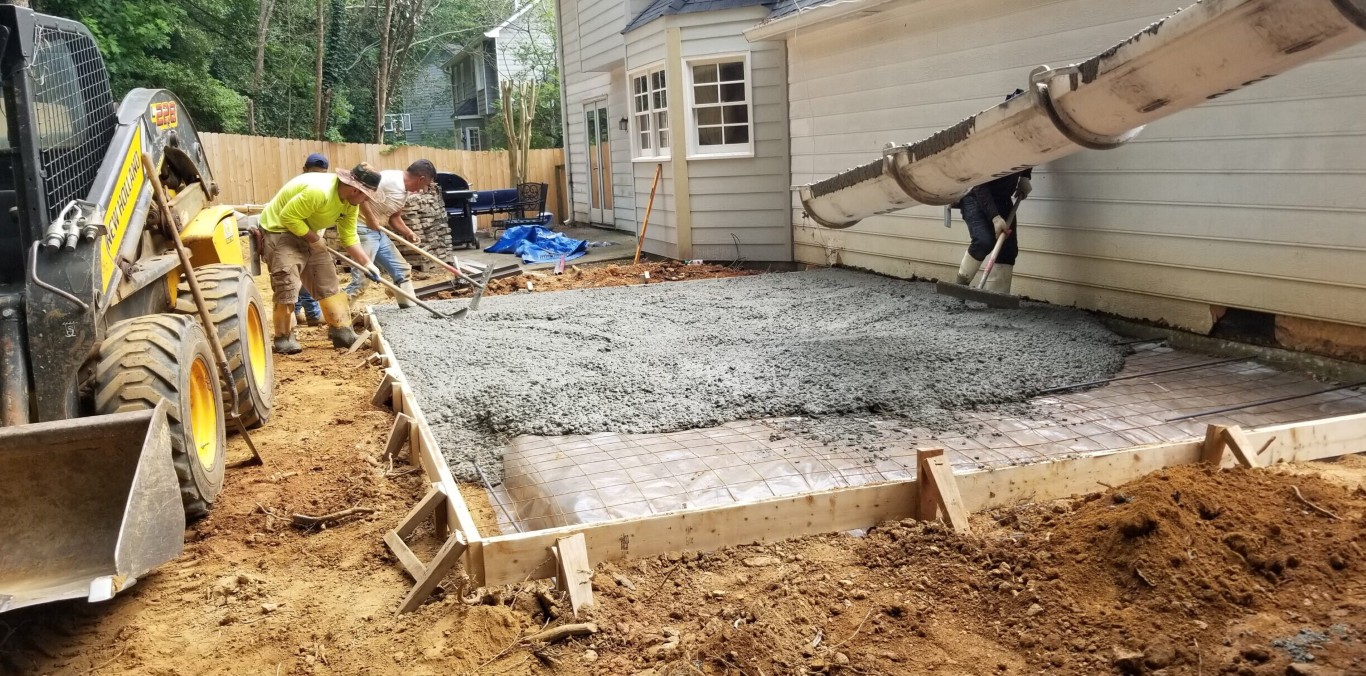
We build forms to contain the concrete and define the slab dimensions. These forms must be perfectly level and properly braced to withstand the pressure of wet concrete. Before pouring, we install any necessary plumbing or electrical conduits that will run under or through the slab. We place a vapor barrier over the gravel base to prevent moisture migration. Then we install steel reinforcement according to the structural plans. This might include rebar grids, post-tension cables, or welded wire mesh depending on the slab design.
Concrete Placement and Finishing
Pour day requires coordination and speed. Concrete trucks deliver ready-mix concrete to our specifications. Our crew places the concrete, working it into all corners and around reinforcement. We use vibrators to eliminate air pockets. After initial placement, we screed the surface to the proper elevation. As the concrete begins to set, we apply the appropriate finish. For foundations, this is usually a basic trowel or float finish. We install anchor bolts that will secure the building's frame to the foundation.
Curing and Protection
Proper curing is essential for strength development. We apply curing compounds or cover the slab to retain moisture. In cold weather, we may use insulated blankets to protect against freezing. In hot weather, we keep the surface moist to prevent rapid drying. The slab needs at least seven days to develop sufficient strength for framing to begin, though full strength takes 28 days. We coordinate with your builder or project manager to ensure the schedule stays on track.
Preventing Foundation Problems
Most foundation problems are preventable through proper construction techniques and site preparation. Understanding common issues helps you appreciate why we take certain steps during installation. Here are the problems we work to prevent and how we do it.
Settlement and Uneven Settling
Settlement occurs when the soil beneath a foundation compresses under the building's weight. Some settlement is normal and expected. The problem arises when settlement is uneven, causing one part of the foundation to sink more than another. This creates stress that leads to cracks. We prevent excessive settlement through proper soil preparation and adequate base thickness. If we encounter soft or organic soils, we remove them and replace them with engineered fill. The compacted gravel base distributes loads evenly and provides a stable platform.
Cracking
All concrete develops some minor cracks over time due to shrinkage and thermal movement. We minimize cracking through proper mix design, adequate reinforcement, and control joints placed at strategic locations. Control joints create weak points where cracks will form in straight lines rather than random patterns. When cracks do appear, we can evaluate whether they're cosmetic or indicate a structural concern. Small surface cracks rarely affect foundation performance.
Moisture Problems
Water is concrete's enemy when it comes to foundations. Moisture under a slab can wick up through the concrete, causing problems with flooring and promoting mold growth. We prevent this with proper site grading, adequate drainage, and vapor barriers. The gravel base allows water to drain away rather than collecting under the slab. Gutters and downspouts should direct roof water well away from the foundation. If you have drainage concerns, proper grading and water management are essential.
Frost Heaving
In cold climates like ours, water in the soil can freeze and expand, pushing the foundation upward. This is called frost heaving. We prevent it by extending footings below the frost line. The frost line varies by location but is typically 48 inches deep in our area. Proper drainage also helps because wet soil is more susceptible to frost heaving than dry soil. If you're experiencing issues with existing concrete, our repair and replacement services can address foundation problems before they worsen.
Common Questions About Foundation Work
Build on Solid Ground
Your foundation is too important to trust to just anyone. We bring years of experience, proper equipment, and attention to detail to every foundation project. Whether you're building a new garage, shop building, or home, we'll make sure your structure has the solid base it needs. Contact us for a consultation and detailed estimate. We'll explain the process, answer your questions, and provide a realistic timeline and cost.