Serving Fitchburg, MA and surrounding areas. (978) 906-8756
MapleLane Fitchburg Concrete serves Framingham, MA as a licensed concrete contractor specializing in concrete floor installation, driveways, and foundation work. We have been working in the MetroWest corridor since 2022, hold a Massachusetts HIC registration, and carry full liability insurance on every job we take in Framingham.
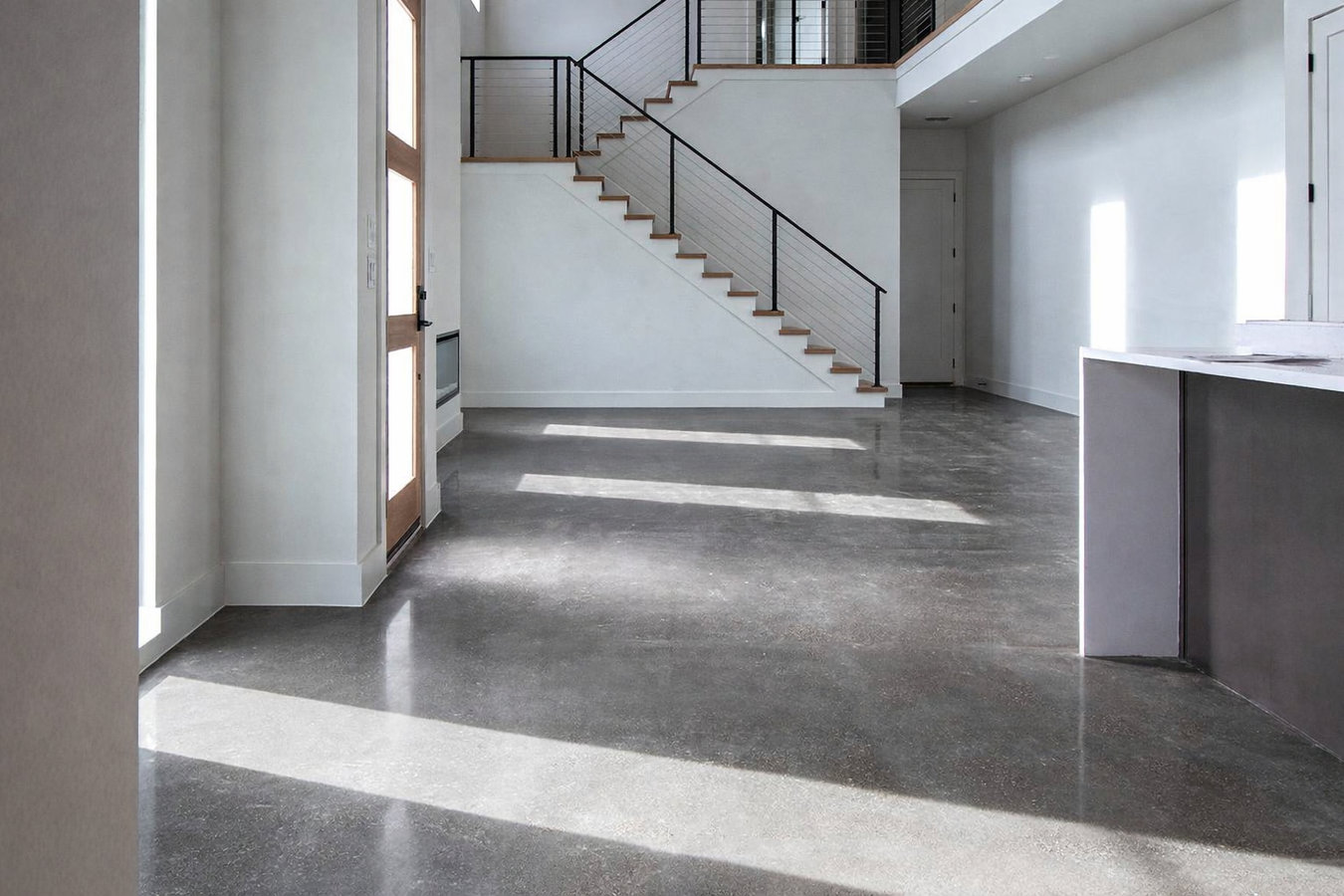
Most Framingham homes from the 1950s and 1960s have original basement or garage floors that were poured thin, without a proper gravel base, and have been through 60-plus winters without replacement. When those floors start cracking, heaving, or showing flaking on the surface, patching only extends the problem. Our concrete floor installation service for Framingham properties covers full slab removal, base correction with compacted gravel and a vapor barrier sized for Framingham's clay-heavy soil, and a new pour with control joints placed to guide any future cracking away from random areas of the slab.
Framingham's postwar Capes and Colonials were built on lots that have now been through half a century of freeze-thaw cycles, and the driveways on those properties reflect it. Many have settled unevenly, been patched in sections over the years, or have bases that shift under the slab each winter. We excavate fully, assess the existing base, compact proper gravel, and pour a driveway graded to drain away from the house, not toward it, which matters especially on lots near Farm Pond where the water table sits close to grade.
Properties in Framingham near the Sudbury River corridor and in the Saxonville neighborhood deal with drainage challenges from clay soil and proximity to low-lying areas. Retaining walls on these lots take hydrostatic pressure behind them each spring when the ground saturates. A properly built concrete retaining wall includes drainage aggregate and weep holes behind the wall face, and footings set below the frost line so the wall does not shift with each season.
Framingham homeowners investing in outdoor space need a patio built for close to 50 inches of annual snowfall. We size the base depth and concrete mix for Framingham's winters, grade the surface to drain away from the home, and place control joints to direct long-term movement to planned locations. Properties near the wooded Nobscot area benefit from patio designs with positive drainage away from tree root zones that can lift a slab from below over time.
Framingham's mix of Capes, Colonials, and ranch homes means front entry steps and side-door landings handle the full weight of winter foot traffic, road salt, and freeze-thaw stress every year. Prefabricated steps in Framingham often sit on setting beds that get undermined by the clay soil shifting beneath them. Poured-in-place steps, set on footings below the frost line and matched to your home's exact rise-and-run, stay level and do not rock.
Framingham sits about 20 miles west of Boston along the Mass Pike, in a climate that averages close to 48 inches of snow per year and hard ground freezes from December through February. The freeze-thaw cycle in late winter and early spring is the most destructive force working on residential concrete in Framingham each year. Temperatures swing above and below freezing repeatedly from February through April, expanding and contracting the ground beneath driveways, basement floors, and foundation walls with each cycle. Concrete poured without a proper gravel base, without control joints, or on a base that has already shifted will show cracking within a few seasons in this climate.
Framingham's soil makes this worse. Much of the city sits on glacial till and clay-heavy soil that drains slowly. After heavy rain or snowmelt, water pools in yards and against foundations for days, particularly in lower-lying areas near the Sudbury River and around Farm Pond. Homes in these neighborhoods deal with hydrostatic pressure against basement walls and floors every spring, and that sustained water contact is one of the primary reasons older basement slabs in Framingham develop cracks that widen over time rather than staying stable. A contractor who does not account for drainage in the base design is setting up a floor that will fail sooner rather than later.
The housing stock adds another layer of complexity. Framingham's postwar building boom produced thousands of Cape Cod and Colonial homes from the late 1940s through the 1970s, many of which have never had their original basement or garage slabs touched. In the Saxonville village area, some homes predate 1900 and may have stone or brick foundations that require careful coordination when any concrete work is done nearby. Knowing which part of Framingham a property is in tells you a great deal about what a concrete crew should expect to find.
We pull permits for Framingham projects through the Framingham Building Department, which became a city department in 2018 when Framingham transitioned from town to city status. Framingham covers roughly 26 square miles with a mix of older downtown streets, the historic Saxonville mill village along the Sudbury River, and newer subdivisions out toward the Nobscot neighborhood in the north. Each area presents a different set of conditions, and we plan each job accordingly.
The city's geography shapes drainage on almost every lot. Properties near Farm Pond and the Sudbury River sit at lower elevation, where the water table is closer to grade and clay soil holds moisture for extended periods. Homes near Framingham State University and in the central parts of the city sit on more varied terrain, with some well-drained lots and others that collect water after storms. We assess drainage at every site before pricing a job, because the same floor replacement costs more on a wet lot than a dry one.
Framingham sits in the MetroWest corridor, and we serve several nearby communities. Homeowners along the Route 20 and Route 9 belt to the west will find our Marlborough page covers that area. For communities along Route 128 to the north, Waltham shares many of the same postwar housing characteristics as Framingham and is served separately.
Call or submit the contact form and describe what you need. We respond within 1 business day. We will ask basic questions about the space, approximate square footage, and whether the existing slab needs to be removed. No commitment at this stage.
We come to your Framingham property, inspect the existing floor or ground, check drainage patterns and soil conditions, and assess how much base preparation is needed. This step is how we price the job accurately, including cost. You receive a written, itemized estimate at no charge. We will walk through every line item with you before you decide.
We apply for all required permits through the Framingham Building Department before any work begins. You do not need to visit city offices or schedule inspections yourself. Once permits are in hand, we confirm your start date and put the project timeline in writing.
Our crew handles everything: demo, hauling, base preparation, pour, and finish. We clean up daily and give you a thorough walkthrough when the job is complete. For basement and garage floors, we review curing timelines with you so you know exactly when the surface is ready for use.
We serve Framingham homeowners from Saxonville to Nobscot to downtown. Written estimates, all permits handled, no-pressure process.
(978) 906-8756Framingham became a city in 2018 after more than 375 years as a town, making it one of the more recent additions to Massachusetts' roster of cities. With about 73,000 residents and roughly 26 square miles, it is one of the 10 largest cities in the state. The city straddles Route 9 and the Mass Pike, making it a regional hub for both commuters headed east toward Boston and residents who work locally in the tech and life sciences corridor. It includes several distinct villages and neighborhoods, with downtown Framingham, Saxonville, and Nobscot each having their own character and housing stock.
The bulk of Framingham's residential housing was built during the postwar boom of the late 1940s through the 1970s. Drive through most neighborhoods and you will see Cape Cods, two-story Colonials, and ranch homes on modest lots, most of them wood-framed with either vinyl siding or original wood clapboard. The Saxonville village area, built around a 19th-century mill along the Sudbury River, has some of the city's oldest homes, with stone foundations and framing from the 1800s that require particular care during any concrete work nearby. Framingham is also home to a large and long-established Brazilian community centered around downtown, and many of those homeowners have invested significantly in their properties over the years.
We serve Framingham and the surrounding MetroWest area. For homeowners in communities to the northwest, Marlborough is covered by its own dedicated service page. To the north along Route 128, Waltham shares similar postwar housing characteristics and is served separately.
Custom concrete driveways built to last through New England winters.
Learn moreDurable outdoor patios designed for comfort and long-term performance.
Learn moreSafe, level sidewalks installed to code for residential and commercial properties.
Learn moreStructural retaining walls that control erosion and reshape your landscape.
Learn morePrecision floor pours for basements, workshops, and commercial spaces.
Learn moreSolid entry and exterior steps crafted for safety and lasting first impressions.
Learn moreProperly reinforced slab foundations for new construction and additions.
Learn moreComplete foundation systems installed to meet local building requirements.
Learn moreHeavy-duty parking lots engineered for high-traffic commercial use.
Learn moreServing these cities and communities.
Call us at (978) 906-8756 or use the form below. We serve all Framingham neighborhoods and respond within 1 business day.