Serving Fitchburg, MA and surrounding areas. (978) 906-8756
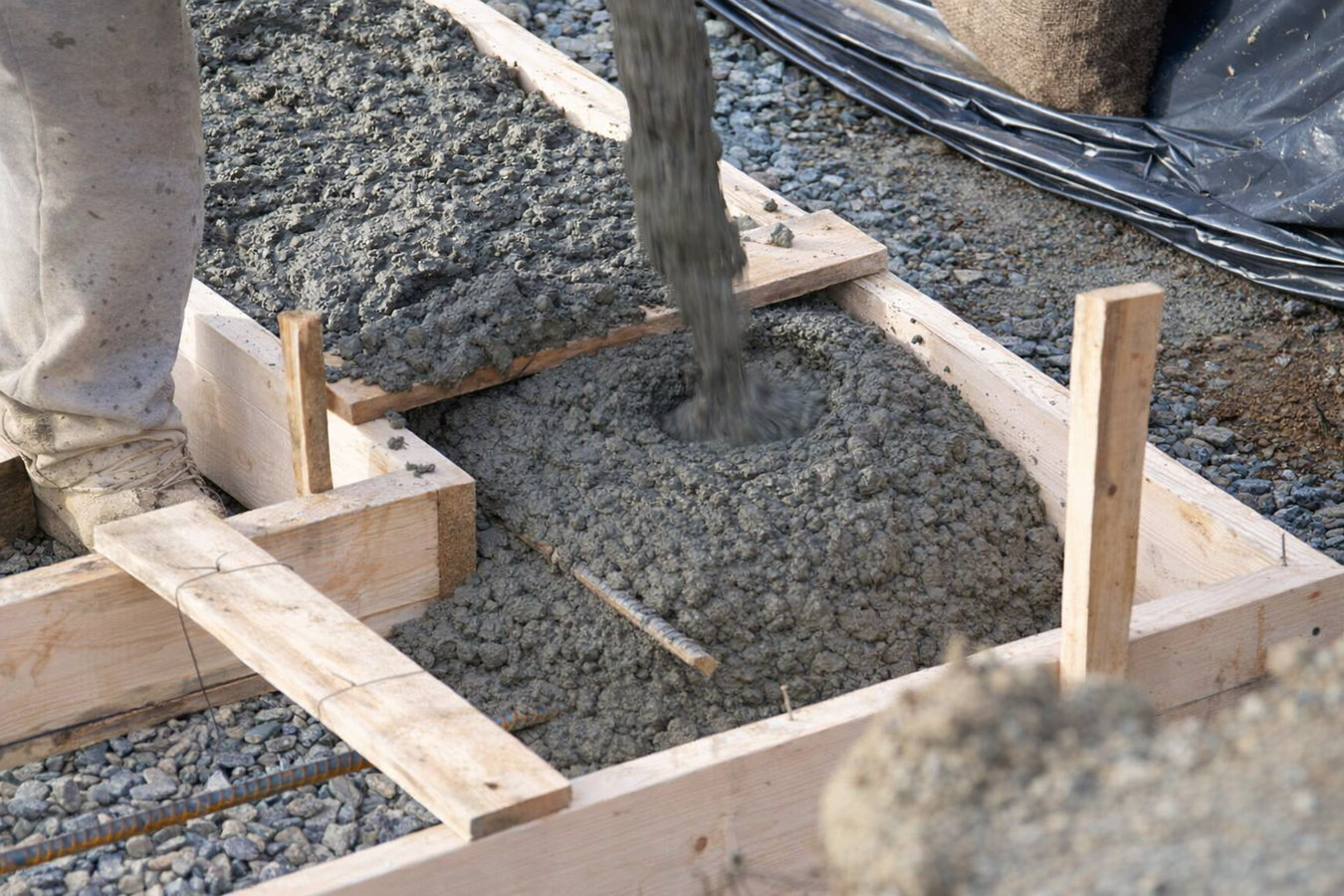
Shallow footings in a central Massachusetts winter shift, heave, and take everything above them with it. Properly dug and poured below Fitchburg's 48-inch frost line, reinforced with rebar, and permitted through the city, your deck, addition, or structure stays level for decades.
Concrete footings in Fitchburg are excavated to below the frost line, formed, reinforced with steel rebar, and poured under a city building permit with an inspector sign-off before concrete is placed - most residential footing projects run one to three days of active work, with the concrete reaching working strength within about a week.
A footing is the wide, buried pad of concrete that spreads the weight of whatever sits above it, whether that is a deck post, a porch column, or the foundation wall of an addition. Without a proper footing, structures sink, tilt, or crack over time. In Fitchburg, where the ground can freeze nearly four feet deep in a hard winter, that depth requirement is not a guideline - it is what keeps your deck from heaving and your steps from tilting a little further every spring.
Footing work is often the first step in a larger project. If you are planning a new foundation installation or adding structure that will later need foundation raising, getting the footings right from the start determines the success of everything that follows.
If you can see a gap opening between your deck and the house, or if the structure looks like it is tilting even slightly, the posts may no longer be sitting on solid footings. This is especially common in Fitchburg's older neighborhoods, where deck footings were sometimes set too shallow and have been heaved up and dropped by decades of freeze-thaw cycles. A leaning deck is a safety issue, not just a cosmetic one.
Horizontal or stair-step cracks in a foundation wall, or a floor that feels uneven underfoot, can signal that the footings below are shifting or settling. In Fitchburg, where homes sit on variable glacial soil, one section of a footing can settle faster than another, causing the wall above to rack and crack. A crack that is growing wider over time is worth having assessed sooner rather than later.
When a footing shifts, the framing above it shifts too, and one of the first signs homeowners notice is a door that suddenly sticks or a window that will not latch. If this is happening in a specific area of your home and you have not had obvious water damage or settling elsewhere, it is worth asking a contractor to look at what is happening at the foundation level below.
Any new structure that attaches to your home or carries significant weight needs proper footings before anything else is built. If you are getting ready to add a deck, a sunroom, or a detached garage, the footing work is the first step - and skipping or skimping on it causes problems with everything built above it. This is also the stage where a permit is required in Fitchburg.
We pour concrete footings for residential structures throughout Fitchburg and surrounding Worcester County, from isolated spread footings under deck posts to continuous wall footings for new additions and outbuildings. Every project starts with a site visit. We assess the soil conditions, access for digging equipment, and required depth before giving you a written price. Fitchburg's glacially deposited soil varies from one street to the next, so seeing the site is the only honest way to quote accurately.
We pull all required building permits through the City of Fitchburg Inspectional Services Department and schedule the required city inspection before the concrete is poured. This step is not optional, and a contractor who suggests skipping it is one to walk away from. The inspection protects you by confirming the depth and layout meet code before anything is buried. We use steel rebar reinforcement in every footing, placed before the concrete arrives, and we include that in every quote, not as an optional add-on.
Footing work on Fitchburg's older housing stock sometimes involves assessing what is already in the ground before planning the new work. A home built in 1905 may have original footings that are shallower than current code requires. If you are adding load to the structure, whether from a deck, a room addition, or a heavy renovation, knowing what the existing footings can carry shapes the design. We assess the existing conditions and are direct about what we find. Projects that later need full foundation installation or foundation raising can be scoped together with the footing work to avoid multiple mobilizations.
For homeowners adding or replacing a deck on their Fitchburg property, requiring isolated footings dug to frost depth at each post location.
Continuous footings for room additions or sunrooms where the new structure connects to the existing home and must meet current code.
Suits replacement or new construction of front or rear porches on Fitchburg homes, including assessment of whether original footings can be retained.
For detached garages, sheds, and other outbuildings where a permitted footing is required before the structure can be legally built or permitted.
For homeowners with older Fitchburg properties who want to confirm whether existing footings are adequate before adding load through a renovation or addition.
For late-season projects in Fitchburg where work must proceed with protective measures to ensure proper curing before temperatures drop below freezing.
Fitchburg sits in north-central Massachusetts, where the ground freezes to depths of 48 inches or more in a hard winter. The Massachusetts State Building Code (780 CMR) requires footings to be placed below this frost depth. When a footing sits above the frost line, the expanding frozen soil pushes it upward and drops it back down each year, a process that eventually destroys whatever sits on top. This is not a theoretical risk in Fitchburg: it is what you see in the older decks and porches throughout the city that have pulled away from the house, tilted, or cracked apart. The required depth here is significantly more than in southern states and more than in coastal Massachusetts, and it directly affects the cost and scope of every footing project.
Fitchburg's glacially deposited soil adds another layer of variability. The ground here is a mix of clay, sand, gravel, and boulders left behind by retreating glaciers thousands of years ago. Hitting a large rock while digging is common enough that any honest Fitchburg contractor will bring it up before you sign. Soil conditions vary significantly from one street to the next, which is why a site visit before quoting is essential and why contractors quoting over the phone without seeing the ground are doing you a disservice. Homeowners in Gardner and Leominster share these same glacial soil conditions and the same frost-depth requirements.
A large portion of Fitchburg's housing stock was built in the late 1800s and early 1900s, when footing standards were far less rigorous than they are today. Many of those original footings were poured shallower, narrower, and without rebar. If your home is more than 80 years old and you are planning any work that adds load to the structure, asking a contractor to assess the existing footings before the design is finalized is a reasonable and relatively inexpensive step that can prevent far more expensive problems later. We see this regularly on projects in Worcester, where the pre-war housing stock presents the same considerations.
We visit the property in person to assess soil conditions, equipment access, and required depth before quoting. We reply within one business day to schedule that visit. You receive a written estimate that breaks down the work, not a phone ballpark, within a few days.
For any footing supporting a structure, we apply for a building permit through the City of Fitchburg Inspectional Services Department before any digging starts. Permit processing typically takes a few business days to two weeks. We manage all the paperwork.
We dig to the required depth, set up the forms that shape the concrete, and place steel rebar inside before the pour. This is also when the city inspector visits to verify depth and layout. There may be a short wait between digging and pouring for that sign-off.
Once the inspector approves, the concrete truck arrives and we pour the footings. The forms stay in place while the concrete cures. We give you a specific timeline for when the footings are ready to build on, based on weather and the size of the pour. Typical wait is about a week under normal conditions.
No obligation. We visit the site, assess soil conditions and depth requirements, and give you a written price before you commit to anything.
(978) 906-8756Every footing we pour in Fitchburg is excavated to below the frost line per Massachusetts State Building Code. We do not cut depth to save time or materials. This is the single most important thing we do, and it is the difference between footings that stay level for decades and footings that heave the first hard winter.
We pull every permit through Fitchburg's Inspectional Services Department and manage the required inspection before the concrete is poured. The inspection record protects you - it is proof the work was done correctly, on file with the city, available if you sell or refinance.
Fitchburg's glacial soil is unpredictable. We discuss potential ledge and boulder conditions with every homeowner before signing a contract, and we are direct about how we price unexpected conditions. Contractors who avoid this conversation are the ones whose estimates balloon once digging starts.
We follow American Concrete Institute guidance on mix design, rebar placement, and curing for each type of footing. Steel reinforcement is included in every pour, not an upsell. In Fitchburg's climate, skipping rebar in footings is not something we do.
Footing work is buried work. Once the concrete is poured and the hole is filled back in, there is no way to inspect it without digging it back up. That is why we treat the permit and inspection process as the most important part of the job, not a formality. An inspector who has seen the depth before the pour is the independent confirmation that the work was done correctly - and that your deck, addition, or structure is sitting on a footing that will stay put.
Structural foundation raising for Fitchburg homes where the existing foundation needs to be lifted to correct settling, improve clearance, or allow foundation replacement below.
Learn moreFull concrete foundation installation for new construction and replacement foundations on Fitchburg properties, excavated below frost depth and waterproofed before backfill.
Learn moreSpring footing slots in Fitchburg fill up fast. Reach out now to get on the schedule before the busy season closes out available dates for your project.