Serving Fitchburg, MA and surrounding areas. (978) 906-8756
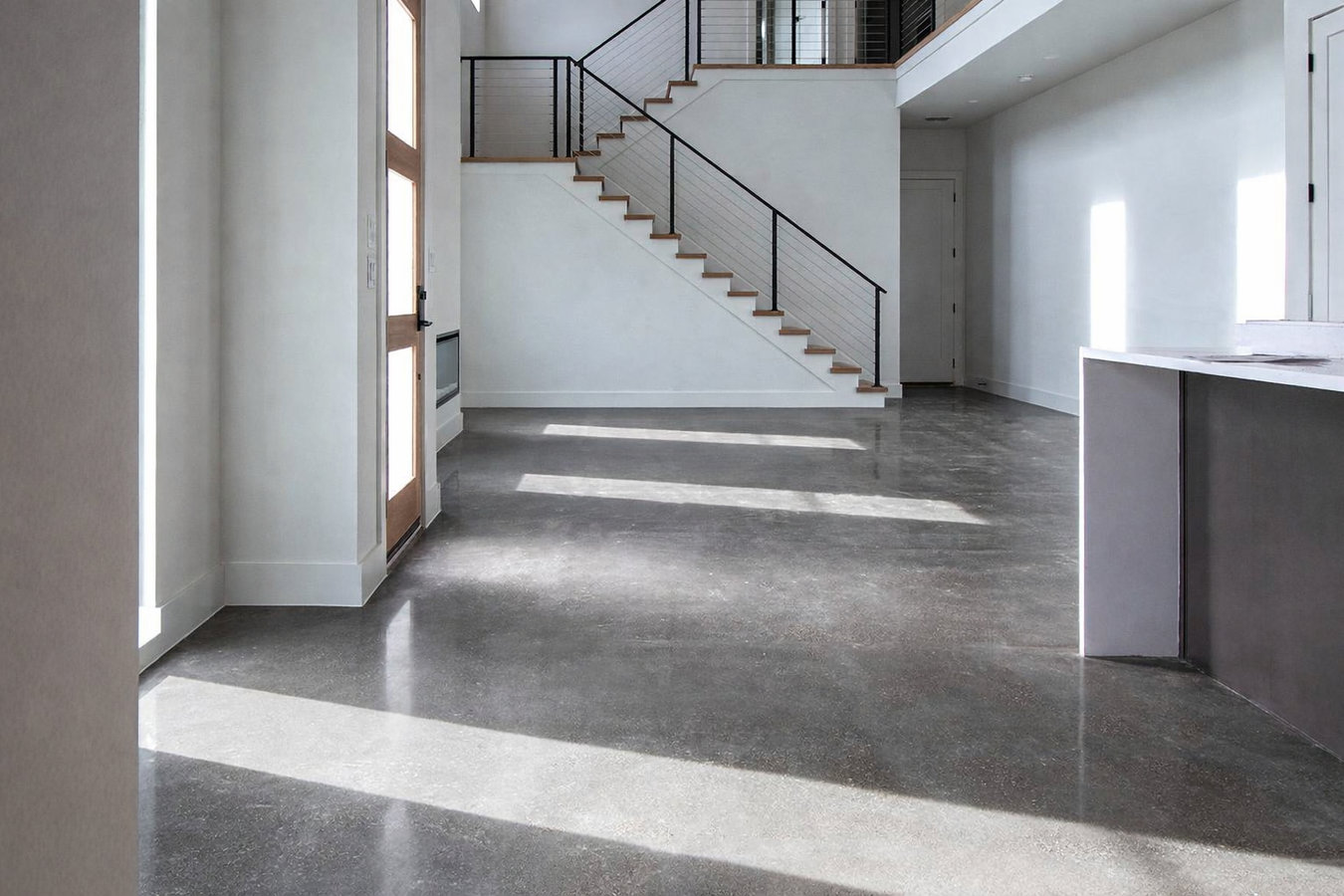
A cracked, uneven, or deteriorating floor is more than an eyesore. It signals a base that has already failed. A properly built concrete floor, with the right sub-base for this climate and soil, gives you a surface that handles decades of use without the cracking and heaving that plague older Fitchburg slabs.
Concrete floor installation in Fitchburg means preparing the ground, laying a compacted gravel base, pouring a properly reinforced slab, and finishing the surface - most residential floors take one to three days on-site, with a curing period of 24 to 48 hours before foot traffic. What happens under the concrete matters as much as the pour itself, especially in a region with clay-heavy soil and 60-plus freeze-thaw cycles each winter.
Fitchburg's older housing stock means a large share of floor jobs here involve removing and replacing an original slab that was poured thin, often only two inches, directly on soil without a gravel base. Those floors have been shifting and cracking for decades, and patching them rarely provides lasting results. A full replacement, built to modern standards with the right base depth and joint placement, is usually the more cost-effective path for the long term.
If your project involves the garage, our garage floor concrete service covers that specific application in detail, including the surface finish choices and sealing options that hold up best under vehicle traffic and road salt tracked in from outside.
Small hairline cracks are common and often harmless, but cracks wide enough to catch a finger, or cracks that have grown noticeably over a season, suggest the slab is shifting or deteriorating. In Fitchburg's older homes, this is often the result of decades of freeze-thaw movement working on a thin original slab. Once cracks reach this stage, patching rarely holds long-term and a full replacement is usually the more cost-effective path.
If a section of your basement or garage floor has risen, dipped, or feels springy when you walk on it, the ground underneath has shifted. This is a common problem in Fitchburg given the area's clay-heavy soil, which swells and contracts with moisture changes through the seasons. An uneven floor is a tripping hazard, and it will continue to move rather than settle on its own.
If water collects in low spots after a heavy rain or when snow melts off boots and vehicles, the floor has settled unevenly or was never properly sloped. Standing water in a basement or garage accelerates concrete deterioration and creates conditions for mold growth. This is especially worth addressing in Fitchburg, where spring snowmelt pushes significant moisture into older foundations.
When the top layer starts to chip off or crumble into fine powder, the surface has broken down from freeze-thaw damage, road salt, or a pour that was never properly finished. Once this process starts, it accelerates. A floor in this condition cannot be effectively patched and typically needs to be replaced to restore a safe, cleanable surface.
We handle full slab replacements, new floors in spaces that have never had concrete, and installations as part of larger renovation or finishing projects. Every job includes demo and removal of old concrete if present, soil compaction, gravel base installation, moisture barrier placement where needed, the pour itself, and surface finishing. We do not skip the base work to get to the pour faster, because that is exactly where most floor failures in Fitchburg originate.
Surface finish options range from a standard broom texture, which provides traction in garages and basements where wet conditions are common, to a smooth trowel finish suited to spaces that will have flooring installed on top. For homeowners who want a more finished look, we also offer decorative concrete finishes including staining and stamping, which can turn a functional basement floor into an attractive finished surface.
Concrete floor installation is frequently paired with other work. If you have an attached garage that also needs a new slab, our garage floor concrete service covers that application directly. Combining projects reduces mobilization cost and keeps your property consistent across spaces.
For homes with original slabs that are cracked, uneven, or too thin to repair effectively.
For homes with dirt or gravel basement floors being upgraded as part of a renovation or finishing project.
Full slab pours for attached and detached garages, with surface options suited to vehicle traffic and salt exposure.
Thicker slabs for outbuildings or interior spaces that will carry equipment, heavy storage, or consistent foot traffic.
For spaces where flooring such as tile, vinyl, or carpet will be installed on top of the concrete.
The most practical finish for garages and basements where wet surfaces need traction.
Fitchburg sits in north-central Massachusetts where temperatures drop below freezing from November through March and can swing dramatically in early spring. Water that seeps into or under a concrete slab freezes, expands, and pushes against the concrete - a process that, over many winters, causes cracking and surface flaking. This makes the base preparation and sealing work done at installation not optional extras, but what determines whether your floor lasts 10 years or 40.
Fitchburg's housing is among the older in Massachusetts, with a large share of homes built before 1960. Many of these homes have original basement floors or garage slabs that are thin, uneven, or cracked beyond repair. Much of the north-central Massachusetts region also has glacially deposited soils with significant clay content. Clay soil absorbs water and expands, then shrinks and settles when it dries, which shifts the ground under a slab over time. A contractor who skips proper compaction and a thick gravel base layer is setting your floor up to fail within a few years.
We serve Fitchburg and the surrounding communities throughout Worcester County, including Leominster, Worcester, and Framingham. The clay soil and freeze-thaw challenges are consistent across this region, and proper base preparation is non-negotiable in every market we work in.
We respond within 1 business day. A short conversation covers which space you are working with, its approximate size, and what you plan to use it for. Most contractors will want to visit before quoting, and any contractor who gives you a firm price without seeing the existing conditions first is worth being cautious about.
During the visit we look at the existing floor or ground, check for drainage issues, and assess how much preparation work is needed before any concrete is poured. This is a good time to ask about base depth, slab thickness, and whether a permit is required for your specific project.
If a permit is required, we handle the application with Fitchburg's Building Department before work begins. On the first day, we remove the old concrete if present, excavate to the right depth, compact the soil, and lay the gravel base layer. This preparation often takes a full day before the actual pour happens.
The concrete is poured, spread, leveled, and finished in a single session. The area is off-limits for at least 24 hours, and we will walk you through a clear schedule for when each stage of use is safe. Sealing the surface after curing is strongly recommended for both basements and garages in Fitchburg's wet winters.
We visit the site before quoting and pull the permit for you. No surprises on the final invoice.
(978) 906-8756North-central Massachusetts has clay-heavy glacial soils that shift with moisture changes. Every floor we install includes thorough soil compaction and a properly sized gravel base layer to keep that movement from transferring into the slab. According to the American Concrete Institute, sub-base preparation is the single most important factor in slab longevity.
Massachusetts requires permits for structural concrete work, and Fitchburg issues them through the city's Building Department. We handle the application on every qualifying project before work begins. This protects you at resale and means a city inspector reviews the work before it is signed off - giving you documentation that the floor was built to code.
Many contractors will patch a floor that should be replaced, because replacement is a harder sell. We give homeowners with older Fitchburg homes an honest read on what they actually have and whether a repair makes economic sense or a new slab is the right move. If a repair can solve the problem, we will tell you that.
We have installed and replaced concrete floors throughout Fitchburg's older neighborhoods, from pre-war triple-deckers near downtown to single-family homes on the hillside streets closer to the edge of the city. Local soil conditions, permit timelines, and what original slabs from this era actually look like are not unknowns for us.
Concrete floor installation is not glamorous work, but it is foundational. A floor built right the first time does not need attention again for decades. That is the standard we hold every pour to, whether it is a simple basement replacement or a full garage slab with a finished surface.
Permit requirements for structural concrete work are governed by the Massachusetts State Building Code. Verify contractor registration through the Massachusetts Office of Consumer Affairs. Technical guidance on concrete slab installation and curing is published by the American Concrete Institute.
Outdoor concrete surfaces around pools require the same frost-resistant base preparation and drainage planning as any other slab in this climate.
Learn moreGarage slabs have specific demands around vehicle load, salt exposure, and surface finish that we cover in detail on the garage floor page.
Learn moreSpring and summer slots fill quickly in this market. Reach out now to lock in your project date and get a written estimate before the schedule closes out.