Serving Fitchburg, MA and surrounding areas. (978) 906-8756
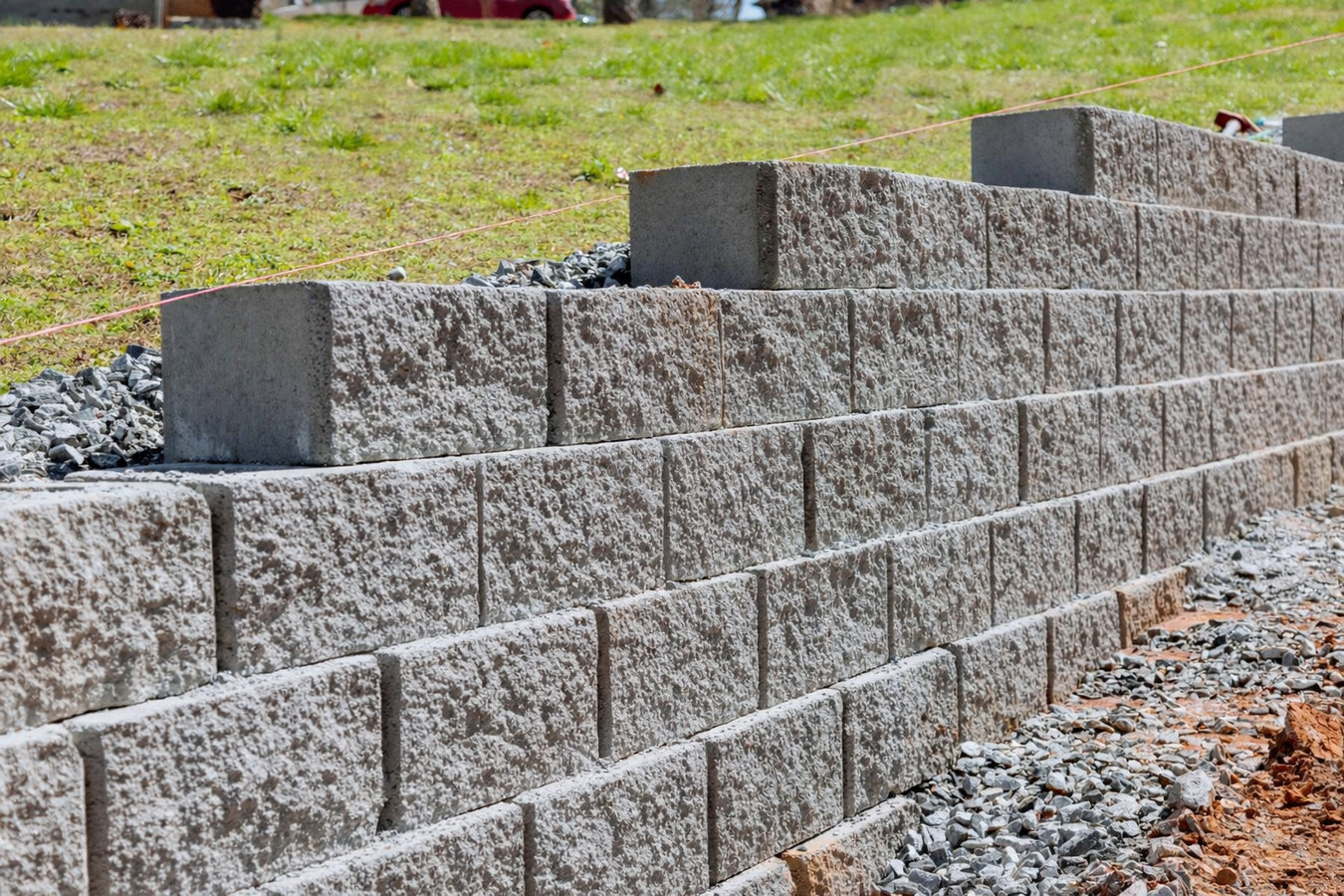
A shifting slope, a leaning wall, or soil washing toward your foundation are problems that get worse every winter. A properly built concrete retaining wall, dug to the right depth and drained correctly, holds that hillside in place for decades.
Concrete retaining walls in Fitchburg hold back sloped soil so it does not erode, slide, or wash toward your foundation - most residential walls, 30 to 50 feet long and up to 4 feet tall, take a crew one to three days to complete. Getting the drainage right and digging the footing to frost depth, roughly 48 inches in central Massachusetts, is what separates a wall that lasts decades from one that starts to lean after a few winters.
Fitchburg's hilly neighborhoods create genuine demand for this work. Slopes on residential lots shift during spring thaw and wash during heavy rain, and many of the city's older stone and brick walls have reached or passed the end of their useful life. If your slope is moving, your wall is leaning, or water is pooling near your foundation after storms, a concrete retaining wall addresses all three problems at once.
If your property needs steps built into or alongside a new wall, our concrete steps construction service is frequently paired with retaining wall projects to give you a complete, functional outdoor structure.
After a heavy rain, soil, mulch, or gravel collects at the bottom of a slope, or bare patches appear where ground cover used to be. This is active erosion, and it will continue season after season until something solid is in place to hold the hill. Once erosion reaches your driveway or foundation, the repair cost climbs significantly.
A wall that is tilting forward, has cracks running through its face, or has gaps where it meets the soil is telling you the pressure behind it is winning. In Fitchburg's older neighborhoods, many of these walls were built without proper drainage and have been quietly failing for years. A leaning wall does not straighten itself out.
When a slope lacks proper containment, rainwater and snowmelt run toward the lowest point, which is often your house. Soft ground, wet basement walls, or standing water along the base of a slope after storms are all signals that water is being directed the wrong way. A well-drained retaining wall redirects that water before it finds your foundation.
Many Fitchburg lots have natural grade changes that make portions of the backyard too steep to mow, plant, or use safely. A retaining wall creates a level terrace, turning a problem slope into usable outdoor space. On the smaller city lots common throughout Fitchburg, that extra flat area matters.
We build new retaining walls from the ground up, replace walls that have failed or reached the end of their lifespan, and repair walls with drainage problems that are causing them to lean. Every project starts with an on-site visit to assess the slope, soil conditions, water drainage, and any nearby utilities, because a retaining wall quote done without seeing the site is rarely accurate.
Our two primary construction methods are poured concrete and concrete masonry block. Poured concrete produces a monolithic wall with no joints, which is often the right choice for taller walls or sites with high soil pressure. Concrete block is well-suited to residential settings where access is limited or the finished appearance matters more. Both methods include a crushed-stone drainage layer and perforated pipe behind the wall, which is what keeps water pressure from building up and pushing the wall forward over time.
Retaining walls often go hand-in-hand with other concrete work. If you need concrete floor installation in a garage or basement near the slope, or concrete steps built into the terraced grade, we can coordinate the work to minimize disruption and reduce mobilization costs.
For properties with a slope that has never been contained or where an old non-concrete wall needs full replacement.
Best for taller walls, high soil-pressure situations, or where a seamless monolithic structure is preferred.
Well-suited to residential properties where site access is tight and a finished appearance is a priority.
For walls that are starting to lean due to water pressure buildup behind them, adding proper drainage can extend their life.
For larger slopes, two or more shorter walls staggered up the grade are often more stable than one tall wall.
Combines the wall with integrated concrete steps for properties where grade changes need both containment and access.
Fitchburg sits in the north-central highlands of Worcester County, with significant elevation changes across many residential neighborhoods. Streets along Rollstone Hill, the Upper Common area, and the Nashua River valley frequently have steep side yards or rear slopes that shift and erode over time. Retaining walls in this city are not a landscaping upgrade for flat lots - for many properties, they are the practical solution to a slope that is actively working against the house.
Frost depth is non-negotiable here. Massachusetts requires footings to go below the frost line to prevent winter heaving, and in Fitchburg that means digging down roughly 48 inches. A wall with a shallow footing looks fine in October and starts to tilt by March. Fitchburg's older housing stock compounds the problem: much of the residential development dates from the late 1800s through the mid-20th century, and many properties have original stone or brick walls that were built without modern drainage systems and are now 60 to 100 years old.
We work throughout Fitchburg and serve homeowners in the surrounding region, including Leominster, Gardner, and Worcester. Hilly terrain is common throughout this part of Worcester County, and we understand what proper drainage and footing depth actually look like on slopes in this climate.
We respond within 1 business day. We will want to come see the site before giving you a number, because a retaining wall quote done over the phone without seeing the slope is rarely accurate.
During the visit we assess the height and length of the wall, how water drains, what is above and below the slope, and whether any utilities are nearby. You will get a written estimate within a few days with no obligation.
For walls taller than 4 feet, we apply for the building permit through the City of Fitchburg Building Department before any work starts. Processing typically takes one to two weeks. We also call Dig Safe to mark underground utilities, as required by Massachusetts law.
We dig the footing trench to frost depth, build the wall up with a proper drainage layer behind it, then backfill the soil in compacted layers and grade the surface. Poured concrete needs about a week before it is at working strength, and you should avoid heavy loads near the wall for 30 days.
We visit every site before quoting, so you get an accurate number. No pressure, no obligation.
(978) 906-8756We dig every footing to the Massachusetts frost line for central Massachusetts, which sits at roughly 48 inches. Walls built shallower than this will heave during freeze-thaw cycles. This is the most common shortcut that leads to leaning walls in Fitchburg, and we do not take it.
Every wall we build includes a crushed-stone drainage layer and perforated pipe behind the wall face. Skipping drainage is how contractors produce walls that look solid in year one and lean in year three. According to the Portland Cement Association, proper drainage is more important to wall longevity than the concrete itself.
We handle the permit application with the City of Fitchburg Building Department for every qualifying project before work begins. This protects you at resale and ensures the work is on record. Homeowners who have had unpermitted walls flagged during a sale understand why this matters.
We have built and replaced walls throughout Fitchburg's hillside neighborhoods, from the Rollstone Hill area to the older residential streets closer to downtown. Local slope conditions, soil types, and the permit office all factor into how this work gets done correctly here.
Every retaining wall project starts with an honest conversation about what your slope actually needs. We do not bid low and add costs later, and we do not recommend more wall than the site requires. If a repair or drainage fix can solve your problem without a full rebuild, we will tell you that too.
For permit requirements, visit the City of Fitchburg Building Department. The Massachusetts Office of Consumer Affairs lets you verify any contractor's Home Improvement Contractor registration in a few minutes. The National Concrete Masonry Association publishes technical guidance on concrete block wall design and drainage.
New slabs for basements and garages, built with the base preparation and frost-resistant specs Fitchburg homes require.
Learn moreIntegrated concrete steps are frequently added to retaining wall projects to provide safe access between grade changes on your property.
Learn moreSpring slots fill fast as snowmelt reveals slope problems across the city. Call today or request an estimate online to get on the schedule before the rush.