Serving Fitchburg, MA and surrounding areas. (978) 906-8756
A slab poured without proper preparation in Fitchburg will crack, heave, and cost you again within a few years. The right preparation, reinforcement, and footing depth make the difference between a foundation that holds through New England winters and one that does not.
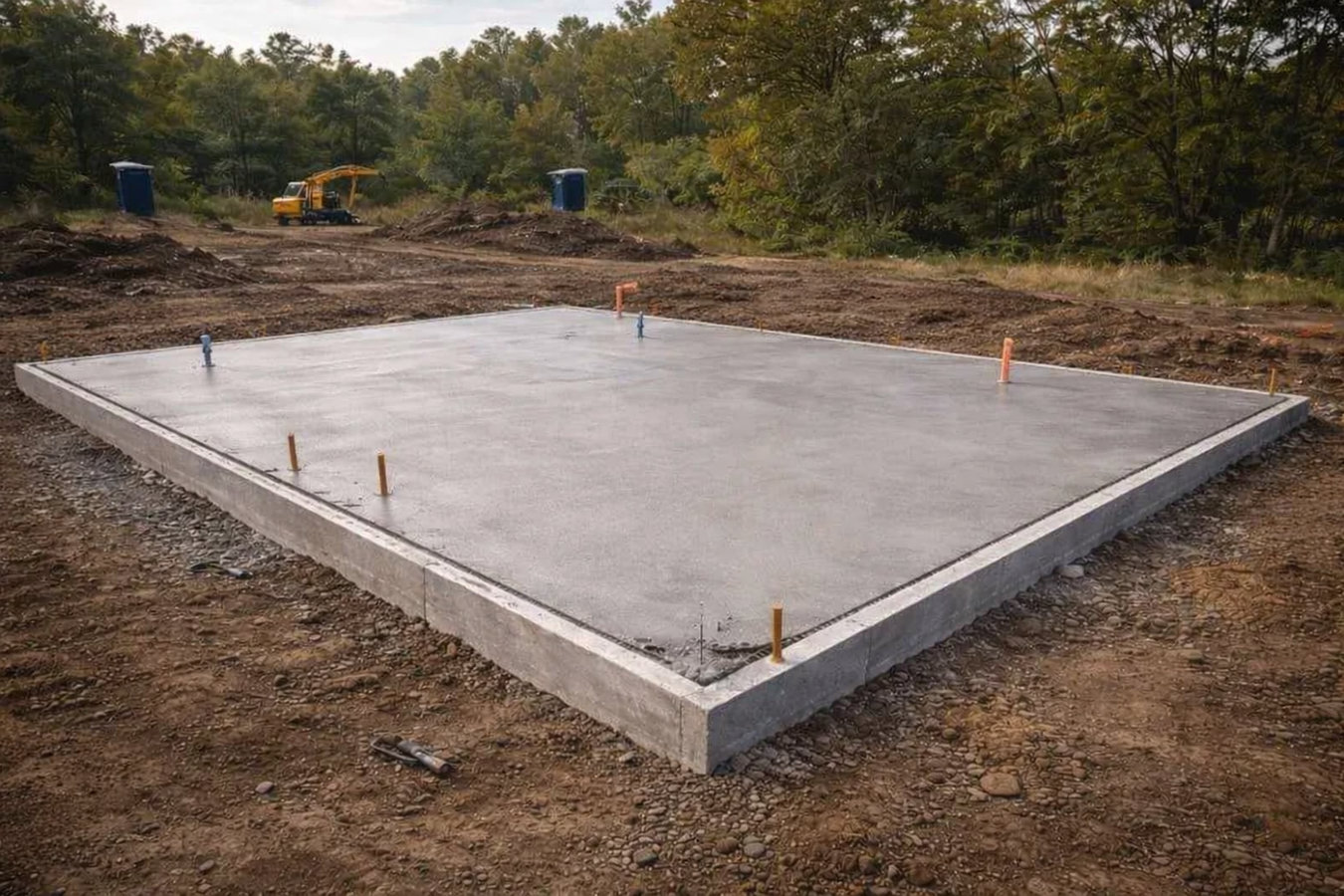
Slab foundation building in Fitchburg means excavating the site, compacting the soil, laying a gravel drainage layer and moisture barrier, setting steel reinforcement, and pouring a concrete slab with thickened perimeter edges that extend below the 48-inch frost line - most projects for a detached garage or addition take one to two weeks from start to a walkable surface, with full concrete strength developing over the following month.
If you are planning a detached garage, a sunroom, a workshop, or any new structure on your Fitchburg property, a slab foundation is typically the fastest and most cost-effective base to build on. The prep work that happens below the surface before a single yard of concrete is poured is what separates a slab that holds for decades from one that starts cracking a few winters in.
Slab work often connects to structural elements above it. If the project also calls for a full foundation installation on a larger structure, or the base needs to connect to concrete footings for load-bearing posts or columns, we can coordinate all of that in one project.
A new detached garage, workshop, sunroom, or accessory structure cannot be built on bare ground. A slab foundation is the first step, and it has to be done right before any framing begins. Skipping proper site prep at this stage is the most common reason slabs crack and shift within a few years of construction.
Small hairline cracks in concrete are normal. But if you can slip a coin into a crack, or if sections of the floor have shifted so that one side is higher than the other, the slab may have been compromised by ground movement. In Fitchburg, repeated freeze-thaw cycles beneath an improperly prepared slab are the most common cause of this kind of structural failure.
Water coming up through the concrete surface or pooling at the base of walls often means the moisture barrier under the slab has failed or was never properly installed. This is more common in Fitchburg's older buildings, where slabs were poured decades ago without modern waterproofing standards. Persistent moisture leads to damaged flooring, mold, and long-term structural problems.
Some older Fitchburg homes have partial basements or crawl spaces with dirt floors - common in houses built before World War II. Pouring a new concrete slab is the first step toward converting that space into a finished room, laundry area, or storage space. It creates a clean, dry, level surface that makes the rest of the renovation possible.
We handle the complete slab foundation process from site assessment through final inspection: excavation and grading, gravel base and compaction, moisture barrier installation, steel reinforcement placement, concrete forming, the pour, and surface finishing. Every slab we build in Fitchburg uses a thickened perimeter footing that extends below the frost line, and we pull the required building permit and schedule city inspections so the project is fully code-compliant when we leave.
For projects involving larger structures, a slab is sometimes part of a broader scope. If the new building calls for a full foundation installation with stem walls or a basement, we can plan that work alongside the slab. And when the structure above needs isolated support points, pairing the slab with proper concrete footings ensures every load path is accounted for before framing begins.
Before the concrete is poured, we document the location of every pipe and conduit in the slab. If a pipe ever needs repair years down the road, you will not be starting from scratch trying to figure out where it runs.
For homeowners adding a new detached or attached garage and needing a properly prepared, reinforced base to build on.
Suits sunrooms, workshops, and home additions where a slab foundation is the fastest route to a stable, permitted base.
For sheds, pool equipment enclosures, and similar outbuildings that need a level, dry concrete floor.
Best for homeowners converting a dirt-floor basement into usable finished or storage space on older Fitchburg properties.
For existing slabs that have cracked, heaved, or been compromised by ground movement and need full replacement rather than patching.
Recommended for any slab in direct contact with Fitchburg's clay-and-till soil, where ground moisture is a persistent concern.
Fitchburg sits at higher elevation than most of eastern Massachusetts, and its winters are genuinely harsher than what coastal homeowners experience. The freeze-thaw cycle here is one of the most demanding in the state, and a slab poured without proper frost-depth footings will be pushed and cracked by the ground long before its useful life is over. The American Concrete Institute publishes guidance on residential concrete design specifically to address these kinds of climate-driven challenges, and any contractor who builds slabs regularly in this region knows those standards by heart.
The soil under Fitchburg properties adds another layer of complexity. The region sits on glacial till - a mix of clay, sand, and rocks deposited by glaciers - and bedrock can be close to the surface in parts of the city. If you are building on a steep hillside lot, common in Fitchburg's older neighborhoods, drainage and compaction take additional planning. Homeowners in Leominster and Gardner face many of the same soil conditions, and we bring that regional experience to every project.
The City of Fitchburg Building Department requires a permit and inspection for all new slab work. That process protects you: an inspector visits before the concrete is poured to confirm the ground was prepared correctly and the reinforcement is in place. Massachusetts also requires contractors performing this work to carry a Construction Supervisor License, verifiable through the Massachusetts OCABR license lookup. We handle the permit and inspection scheduling so you do not have to navigate that process yourself. Clients in Worcester go through the same permit process, and we are equally comfortable managing it there.
We respond within one business day. Expect a short call to understand the project: what you are building, approximate size, and whether you have spoken with the city about permits yet. You do not need to have all the answers.
We come to your property before quoting a price. We assess the slope, drainage, and soil to identify what site prep the ground actually needs. You receive a written estimate that breaks out the major cost categories so you can compare it fairly against other quotes.
We apply for the building permit through the City of Fitchburg Building Department and manage the inspection schedule. Permit processing typically takes one to two weeks. Once approved, you get a confirmed start date.
Excavation, gravel base, moisture barrier, and reinforcement go in first - usually one to three days. The pour follows in a single day. A city inspector signs off at key stages. After the pour, the concrete cures and the inspector does a final walkthrough before we close out the project.
Free written estimate. We visit your site before quoting, pull all permits, and schedule city inspections. No commitment required.
(978) 906-8756The 48-inch frost line in north-central Massachusetts is not a suggestion. Every slab we pour has a thickened perimeter footing that reaches below it. Slabs without this fail; ours do not.
We pull every permit and manage every city inspection. You do not have to navigate the Fitchburg Building Department yourself. When we leave the job, you have a clean paper trail for your home records and future resale.
We have worked on slab projects across Fitchburg and the surrounding communities, which means we know the soil conditions, the permit process, and what Fitchburg inspectors look for at each stage.
Before any concrete covers the plumbing or conduit, we record its location in a simple diagram you keep with your home records. Repairs years from now start with a map, not a jackhammer and a guess. The American Concrete Institute recommends this documentation as a standard practice for residential slabs.
Every one of these points matters specifically in Fitchburg. The geology, the winters, and the permit process here are different from a warmer or newer city, and a contractor who knows that difference is the one who builds a slab you will not have to think about again. Call us or submit an estimate request and we will come look at your site before we quote you anything.
Full basement and stem-wall foundation work for larger Fitchburg structures where a slab alone is not sufficient.
Learn moreIsolated load-bearing footings for posts, columns, and structural supports that connect to or sit alongside a slab.
Learn moreSpring permit windows book fast - reach out now and we will visit your site, assess the ground, and give you a clear written estimate before the best pouring weather is gone.