Serving Fitchburg, MA and surrounding areas. (978) 906-8756
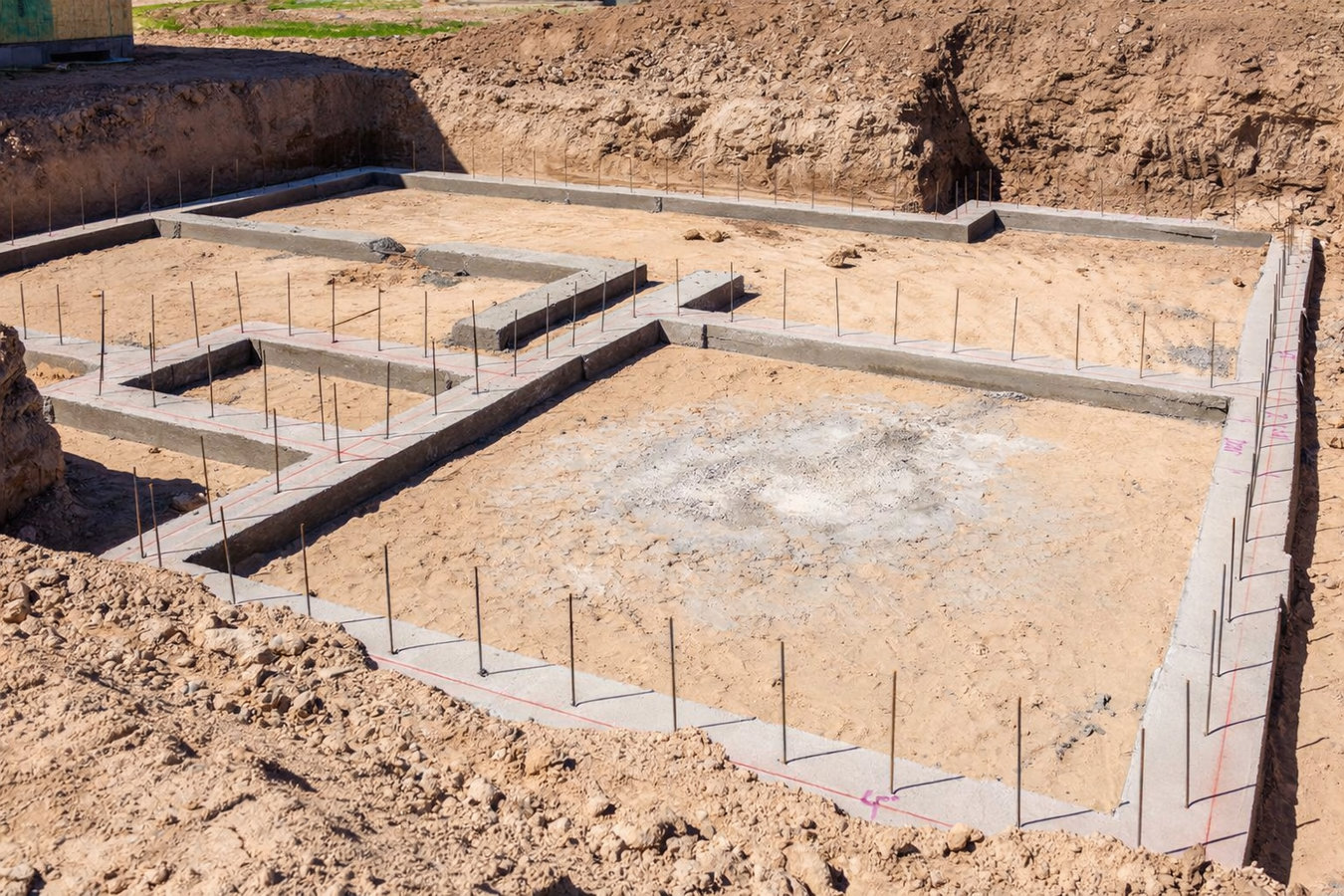
Everything your home stands on depends on the foundation beneath it. Properly excavated, poured below frost depth, and waterproofed before backfill, a new foundation in Fitchburg is built to handle the winters, soil, and building code requirements of central Massachusetts.
Foundation installation in Fitchburg means excavating down to stable soil below the 48-inch frost line, forming and pouring reinforced concrete walls or footings, applying exterior waterproofing before the soil goes back in, and completing all work under a city permit with inspections at key stages - most residential projects run one to three weeks of active construction, with full concrete strength developing over the following month.
Whether you are building a new structure on your Fitchburg property, replacing an original stone or brick foundation that has reached the end of its life, or adding an addition that needs its own foundation to carry the load, this is not work where corners can be cut. A foundation built too shallow will move with the frost. A foundation built without exterior waterproofing will leak. And in Fitchburg, where a significant portion of the housing stock was built over a century ago, the older foundations we replace often show exactly what happens when early materials and standards meet a hundred years of winters.
Foundation work often connects to other structural concrete. If the scope also includes a slab foundation for an adjacent structure, or the parking area alongside the building needs concrete parking lot work, we can coordinate all of that on one project.
Diagonal cracks, especially those wider at one end than the other, are one of the clearest signs that a foundation is moving or settling unevenly. In Fitchburg's older neighborhoods, where many homes sit on stone or brick foundations built more than a century ago, this kind of cracking is worth taking seriously rather than patching over.
When a foundation shifts, the house frame shifts with it, and the first place you notice is usually a door that suddenly sticks or a window that will not latch. This is different from normal seasonal wood movement. When multiple doors or windows are affected at once, the cause is more likely movement in the structure below.
Fitchburg's spring snowmelt can push significant water against foundation walls in a short period. Water seeping through walls or pooling on the floor often means the waterproofing has failed, or was never properly applied. This is common in Fitchburg homes built before the 1970s, when exterior waterproofing was not standard practice.
Stand in your basement and look at the walls from the side. If a wall curves inward rather than running straight, soil pressure outside is winning. This is more common in Fitchburg's older homes where original foundation walls were built thinner than current standards require, and the problem typically gets worse over time if left unaddressed.
We install new concrete foundations for residential construction in Fitchburg and the surrounding area, from full basements on new homes to replacement foundations under existing structures. Every project includes the complete scope: excavation, footing forming and pouring, concrete wall construction, exterior waterproofing, drainage provisions, and backfill. We pull all required permits through the City of Fitchburg Inspectional Services Department and schedule every required inspection. You do not have to manage city hall.
When an existing home needs its original stone or brick foundation replaced, the process requires temporarily supporting the structure above while the old foundation is removed and the new one is built in its place. This is common in Fitchburg's pre-1940 neighborhoods and requires specific experience with older New England homes. Not every contractor does this work, and we recommend asking directly whether any contractor you consider has completed similar projects on properties of comparable age in this area.
For new construction or additions, a foundation installation often connects to other work on the property. If the project also needs a slab foundation for an adjacent garage or outbuilding, or the property is adding paved vehicle access that requires concrete parking lot construction, combining those scopes reduces mobilization costs and keeps the project on a single timeline.
For new residential construction where a full basement is part of the plan, requiring excavation to frost depth across the full footprint.
For existing Fitchburg homes where the original stone, brick, or early concrete foundation has reached the end of its service life.
Suits homeowners adding square footage to a Fitchburg home, where the new addition needs its own properly designed and permitted foundation.
For properties where a full basement is not needed or practical, a short stem-wall foundation keeps the structure above frost depth with less excavation.
Recommended for every Fitchburg foundation, given the region's precipitation and spring snowmelt - exterior waterproofing applied before backfill keeps basements dry.
For Fitchburg homes where an existing shallow or deteriorating foundation needs to be reinforced or deepened without removing the structure above.
Fitchburg's position in north-central Massachusetts means the ground here experiences more freeze-thaw cycles per year than coastal or southern parts of the state. The frost line runs roughly four feet deep, and every foundation must be excavated below that line or the ground will push and shift the concrete over time. This is not a warning that applies only to poorly built foundations; it applies to any foundation that does not respect this specific climate. The Portland Cement Association and the National Association of Home Builders both address frost-depth requirements as a fundamental aspect of foundation design in cold climates - and central Massachusetts is definitively in that category.
Fitchburg's geology adds a layer of unpredictability that contractors who have not worked in this region may not expect. The city sits on glacial till, and encountering ledge rock a few feet into an excavation is genuinely common, particularly in the hillier neighborhoods. Homeowners in Leominster and Worcester face the same soil conditions, and we know from direct experience how to assess that risk during an on-site visit before quoting a project.
Fitchburg also has one of the largest concentrations of pre-1900 housing stock in Worcester County. Replacing original stone rubble or brick foundations on homes of that age is a different skill set from pouring a foundation for new construction, and it requires a contractor who has done it before in neighborhoods like these. The City of Fitchburg Inspectional Services Department requires a permit and multiple inspections for all foundation work, and we handle that process completely. You can verify any contractor's required state Construction Supervisor License through the Massachusetts OCABR license lookup. Clients across the region, including those in Gardner, go through the same permit process, and we are equally comfortable managing it in any of the communities we serve.
We respond within one business day. A short initial call covers the basics: what you are building or replacing, whether there is an existing foundation, and your rough timeline. We ask about the property before scheduling a visit so we show up prepared.
We walk the property, assess slope, drainage, and visible soil conditions, and look for signs of ledge. In Fitchburg, those site factors affect the price significantly. You receive a written quote broken out by major cost category, not a single lump-sum number.
We apply for the building permit through the City of Fitchburg Inspectional Services and manage every required inspection. Processing typically takes one to two weeks. You get a confirmed start date once the permit is in hand.
The heavy phase: excavation to depth, forming, concrete pour, exterior waterproofing, and backfill with final grading. A city inspector signs off at required stages. Once the final inspection is passed and cleanup is complete, we walk you through the finished work before closing the job.
Free written estimate. We visit the site, assess soil and access conditions, handle all permits, and give you a clear cost breakdown before any work begins.
(978) 906-8756Every foundation we install in Fitchburg is excavated and designed with the 48-inch Massachusetts frost line as a hard requirement, not a guideline to approximate. A foundation built too shallow in this climate will move - it is that straightforward.
A meaningful portion of our projects involve homes built in the late 1800s and early 1900s. Replacing an original stone or brick foundation while the house stays standing is different from new construction, and we have done it in Fitchburg's neighborhoods where this is common.
We pull every permit, schedule every city inspection, and deliver you a clean paper trail at project close. That documentation is important when you sell the home, and you should not have to pursue it yourself.
Hitting ledge rock during excavation in Fitchburg is common enough that we discuss it with every client before the project starts. We explain upfront how we handle it and what it costs if it occurs, so you are not blindsided by a change order mid-dig.
Foundation work is the highest-stakes concrete project most homeowners will ever have on their property. The contractor you choose needs to know this city's soil, winters, and permit process, not learn about them on your job. Call us or submit an inquiry and we will come look at your property before we quote you anything.
Concrete slab foundations for detached garages, additions, and accessory structures where a full basement is not needed.
Learn morePoured concrete vehicle surfaces for driveways, parking areas, and commercial lots on Fitchburg properties.
Learn moreReach out now to lock in your start date before the best excavation and pouring windows are taken - call or submit an estimate request for a free on-site visit and written quote.